
How 3D Printing Is Transforming Custom Promotional Products in Australia
Discover how 3D printing applications are reshaping custom promotional products — from unique designs to faster prototyping for Australian businesses.

Written by
Mabel Hayes
Industry Trends & Stats
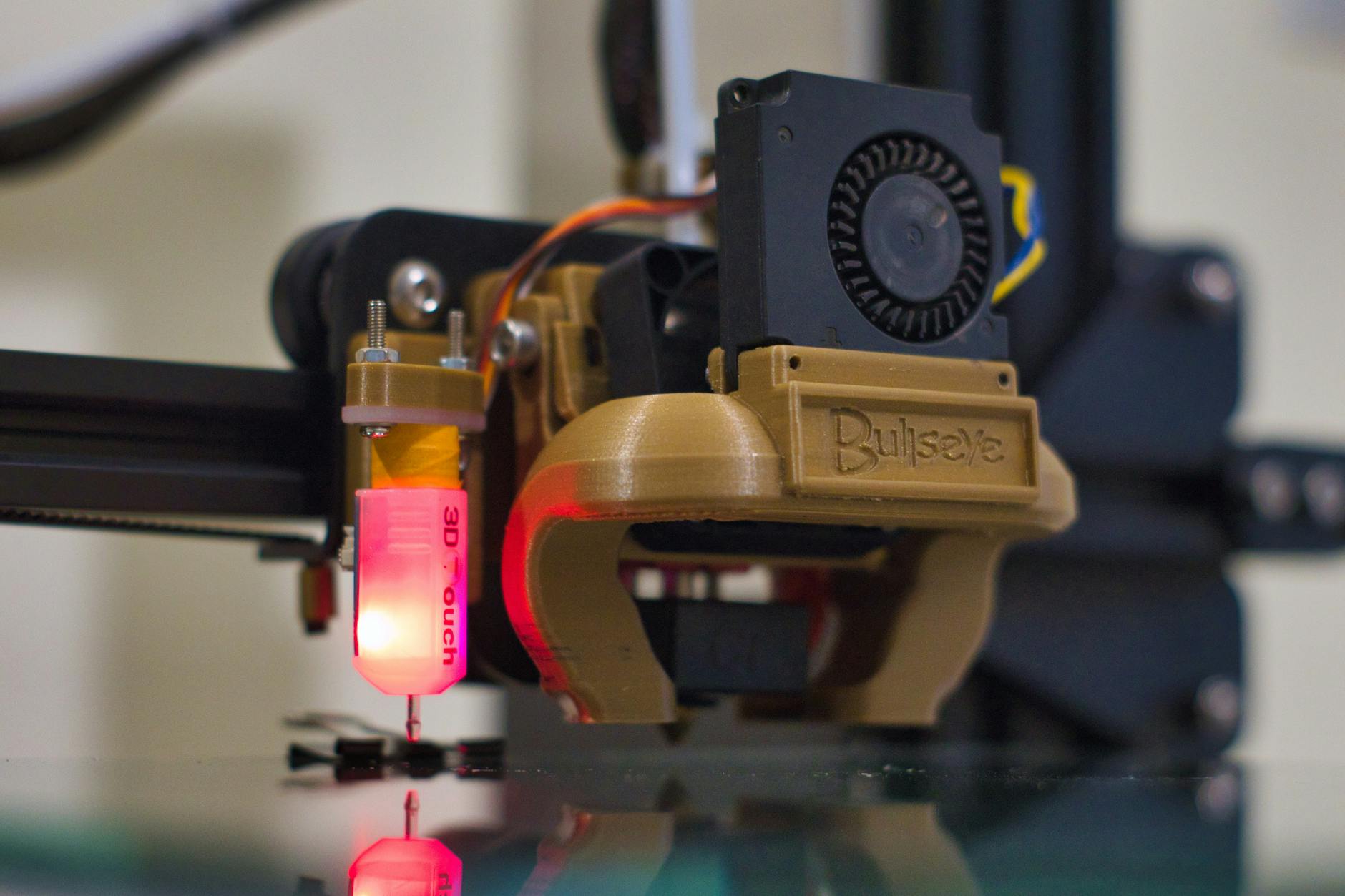
Few technologies have disrupted the promotional products industry quite like 3D printing. What was once reserved for aerospace engineers and industrial manufacturers has quietly made its way into the world of branded merchandise — and for Australian marketing agencies, resellers, and businesses, the implications are significant. Whether you’re sourcing custom items for a Sydney product launch, a Melbourne trade expo, or a Brisbane corporate conference, understanding how 3D printing applications for custom promotional products work could give you a genuine competitive edge in 2026 and beyond.
What Is 3D Printing and Why Does It Matter for Promo?
3D printing — also called additive manufacturing — builds objects layer by layer from digital files, using materials like PLA plastic, resin, nylon, or even metal. Unlike traditional manufacturing methods that rely on moulds, dies, or large production runs, 3D printing can produce individual, highly customised pieces from a single digital file.
For the promotional products industry, this matters enormously. Traditional decoration methods like screen printing, embroidery, or pad printing are excellent for high-volume, standardised items. But when a client needs something genuinely unique — a custom-shaped award, a bespoke display piece, or a product prototype for a product launch — 3D printing opens up possibilities that simply didn’t exist five years ago.
It’s worth noting that 3D printing doesn’t replace traditional methods. Rather, it complements them. Understanding material innovation trends in promotional products helps contextualise where 3D printing sits within a broader landscape of manufacturing advances currently reshaping the industry.
Key 3D Printing Applications for Custom Promotional Products
Custom-Shaped Awards and Recognition Pieces
One of the most compelling 3D printing applications for custom promotional products is in the awards and recognition space. Traditional trophies rely on off-the-shelf acrylic or glass blanks with engraved plates attached. While these still have their place, 3D printing allows for completely bespoke sculptural awards — a company logo rendered as a three-dimensional object, an architectural miniature of a client’s landmark building, or an abstract form that reflects a brand’s identity.
For sales teams, leadership recognition programmes, or long-service awards, this level of personalisation is genuinely powerful. If you’re planning a recognition programme, it’s worth exploring custom trophy ideas for sales target achievement alongside the 3D printed options becoming available through specialist Australian suppliers.
Prototyping and Product Development for Resellers
For promotional product resellers, 3D printing is a game-changer at the prototyping stage. Traditionally, developing a new product required expensive tooling — a die or mould that might cost thousands of dollars and take weeks to produce. With 3D printing, a reseller can create a physical prototype of a new item for a fraction of the cost and have it in hand within days.
This is particularly useful when pitching a custom product concept to a corporate client. Rather than presenting a flat artwork mockup, you can hand the client an actual physical sample of roughly how the product will look and feel. That tactile experience builds confidence in the order and reduces the risk of expensive mistakes down the track.
Customised Tech Accessories and Holders
Tech accessories represent one of the fastest-growing segments in promotional merchandise, and 3D printing is enabling a new wave of truly custom pieces in this category. Custom phone stands, cable management clips, branded desk organisers, and bespoke USB drive housings are all achievable through additive manufacturing.
While standard promotional USB drives remain popular for their practicality and relatively low cost, 3D-printed custom housings can transform a basic drive into a premium branded keepsake — one shaped like a client’s logo, product, or mascot. For high-value corporate gifts and VIP event packs, this kind of differentiation is worth the additional investment.
Unique Keyrings, Clips, and Small Branded Items
Keyrings are a perennial staple of the promotional products world — practical, cost-effective, and universally useful. But 3D printing is injecting new life into this category by enabling shapes and forms that would be impossible or prohibitively expensive to achieve through traditional die-casting or injection moulding.
Businesses looking for something beyond the standard metal or acrylic keyring should explore what local suppliers are now offering in this space. Our guide to promotional keyrings in Sydney gives a strong grounding in the traditional options available, which you can use as a baseline to evaluate how 3D-printed alternatives compare on price, minimum order quantities, and lead times.
Custom Moulds for Branded Food and Confectionery Items
Here’s an application that surprises many people: 3D printing is increasingly being used to create custom silicone moulds for shaped chocolates, gummies, and other confectionery items. A Perth retailer might want their logo shaped into chocolate truffles for a grand opening event. A Gold Coast resort might want custom-shaped lollies for a themed conference.
Combining 3D-printed mould technology with the popularity of promotional confectionery creates genuinely memorable branded experiences. If you’re planning event giveaways that include food products, take a look at our guides on promotional lollies for trade show giveaways and promotional popcorn for Easter promotions to understand how edible branded products fit into the broader promotional mix.
Bespoke Display and Point-of-Sale Pieces
Beyond giveaway items, 3D printing has significant applications in producing custom display stands, counter pieces, and point-of-sale props. For a retail grand opening, a 3D-printed branded display centrepiece can make a dramatic visual statement without the lead times associated with traditional fabrication.
These pieces work especially well for short-run campaigns where a brand needs something striking but doesn’t have the volume to justify tooling costs for traditional manufacturing.
Practical Considerations: What Resellers and Buyers Need to Know
Minimum Order Quantities and Pricing
This is where 3D printing diverges most sharply from traditional promotional product manufacturing. Because there are no moulds or dies required, MOQs can be as low as one unit. This makes 3D printing ideal for premium, low-volume applications — custom executive gifts, one-of-a-kind awards, or prototype runs.
However, unit costs are typically higher than mass-manufactured items, and the economics don’t always make sense for high-volume, lower-priced giveaways. For a large conference giveaway run of 1,000+ items, traditional manufacturing methods generally offer better per-unit pricing. The sweet spot for 3D printed promos tends to be runs of 1 to 500 units where customisation, uniqueness, and quality outweigh cost-per-unit considerations.
Material Options and Decoration Compatibility
Most consumer-facing 3D printed promotional items use PLA (polylactic acid) plastic, PETG, or UV-cured resins. These materials can be produced in a wide range of colours, and finished surfaces can be painted, powder-coated, or further decorated using pad printing or laser engraving.
For clients interested in sustainability, PLA is notable for being biologically derived and industrially compostable — aligning well with the growing demand for reusable and eco-conscious branded items. Similarly, suppliers working with ocean plastic and recycled materials are exploring how recycled filaments can be incorporated into 3D printed promotional pieces.
Turnaround Times and File Requirements
One of 3D printing’s genuine advantages is speed for small runs. A single custom piece can often be produced and dispatched within two to five business days, depending on complexity and finish requirements. However, buyers need to supply — or have created — a proper 3D design file (typically an STL or OBJ format), which requires either 3D modelling software or the services of a 3D designer. This is an additional step compared to ordering standard branded merchandise where a flat vector artwork file is typically all that’s needed.
For resellers, building a relationship with a 3D designer or a supplier that offers in-house design services is essential if you want to offer this capability to your clients consistently.
Quality Assurance and Finishing
Raw 3D printed items often require post-processing — sanding, priming, painting, or coating — to achieve the polished look expected of a professional branded product. Buyers should ask suppliers specifically about their finishing process and request samples before committing to any significant order. The same principle that applies to reviewing debossing quality on leather promotional products applies here: always verify the physical finish before approving a production run.
Which Industries Are Adopting 3D Printed Promos in Australia?
Across Australia, several sectors are leading early adoption of 3D printing for promotional purposes:
- Healthcare and biotech organisations are using 3D-printed anatomical models as branded educational tools at conferences and expos.
- Construction and trades businesses are exploring custom branded components and tools — an interesting parallel to the demand we see for custom tool belts for electrical contractors and other trade-specific branded items.
- Corporate wellness programmes are incorporating custom-shaped 3D printed accessories alongside more traditional items like branded yoga mats and thermal mugs.
- Tasmanian businesses and regional operators — including those we cover in our guide to Hobart promotional products — are finding 3D printing particularly useful for sourcing genuinely unique items without relying entirely on imported generic stock.
The Road Ahead for 3D Printing in Promotional Products
The technology will only become more accessible and affordable as 3D printing hardware costs continue to drop and the pool of skilled operators grows. Multi-material printing, full-colour additive manufacturing, and metal printing are all becoming more viable at smaller commercial scales — meaning the range of 3D printing applications for custom promotional products will expand considerably over the next three to five years.
For resellers and marketing agencies, the strategic opportunity is to position this capability as a premium, differentiated offering for clients who want truly unique branded experiences. Rather than competing purely on price for commodity items, adding 3D-printed custom pieces to your product range creates a clear point of difference.
Key Takeaways
- 3D printing enables genuinely unique promotional products — custom-shaped awards, bespoke tech accessories, and one-of-a-kind keyrings that simply can’t be produced through traditional manufacturing at low volumes.
- The economics suit low-to-mid volume orders — MOQs as low as one unit make 3D printing ideal for premium gifts and prototypes, though per-unit costs are higher than mass-manufactured alternatives.
- File preparation is a critical step — buyers and resellers need access to 3D design files (STL/OBJ format), which requires either in-house capability or a trusted design partner.
- Finishing quality varies significantly — always request a physical sample and understand the post-processing workflow before approving a production run.
- The opportunity for resellers is positioning, not replacement — 3D printing complements your existing product range and gives you a credible premium offering for clients who want to stand out.